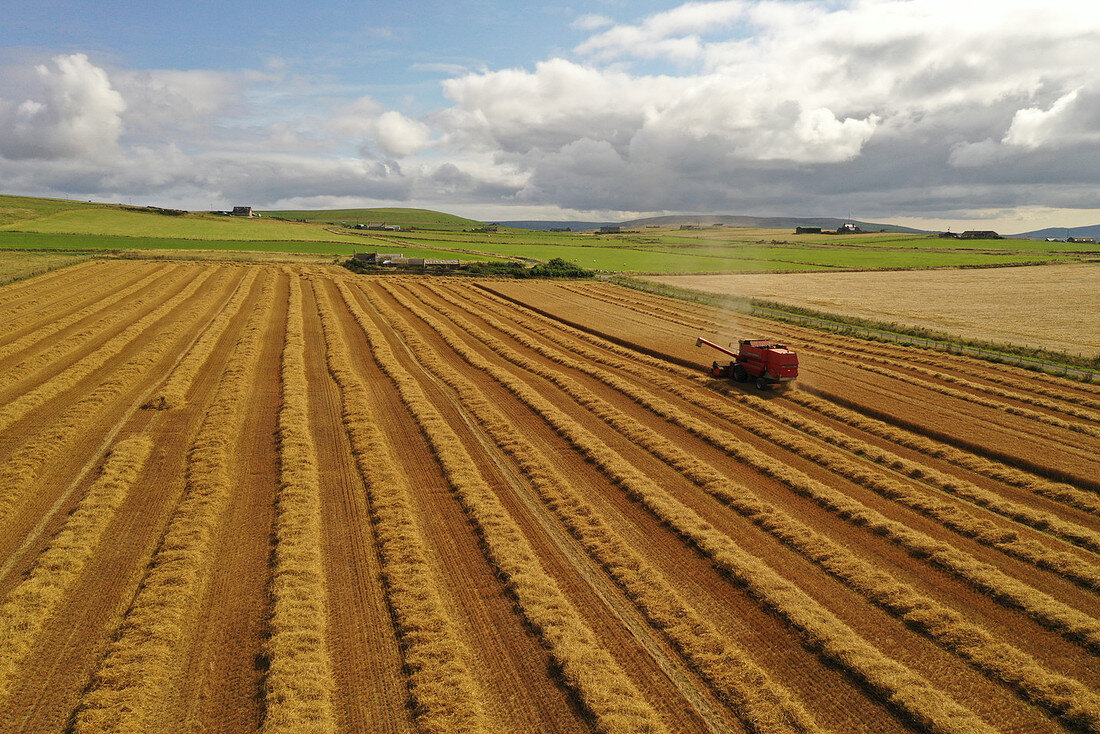
Agricultural demonstrations for a greener Orkney
Why agriculture matters
Recent emissions data from Orkney, Shetland and the Outer Hebrides highlights agriculture as the largest source of greenhouse gas emissions in Orkney.
To address this challenge, we sought to develop a test and demonstration zone around agriculture, engaging with local farmers to better understand their needs and collate project ideas to drive meaningful change.
Four innovative projects are now underway with local farming partners. These initiatives aim to improve efficiency, lower emissions and strengthen the resilience of our farming community. Once proven, these solutions may be replicated across other regions, amplifying their impact and accelerating progress toward a low-carbon future.
Smarter fertilising with Tow and Fert
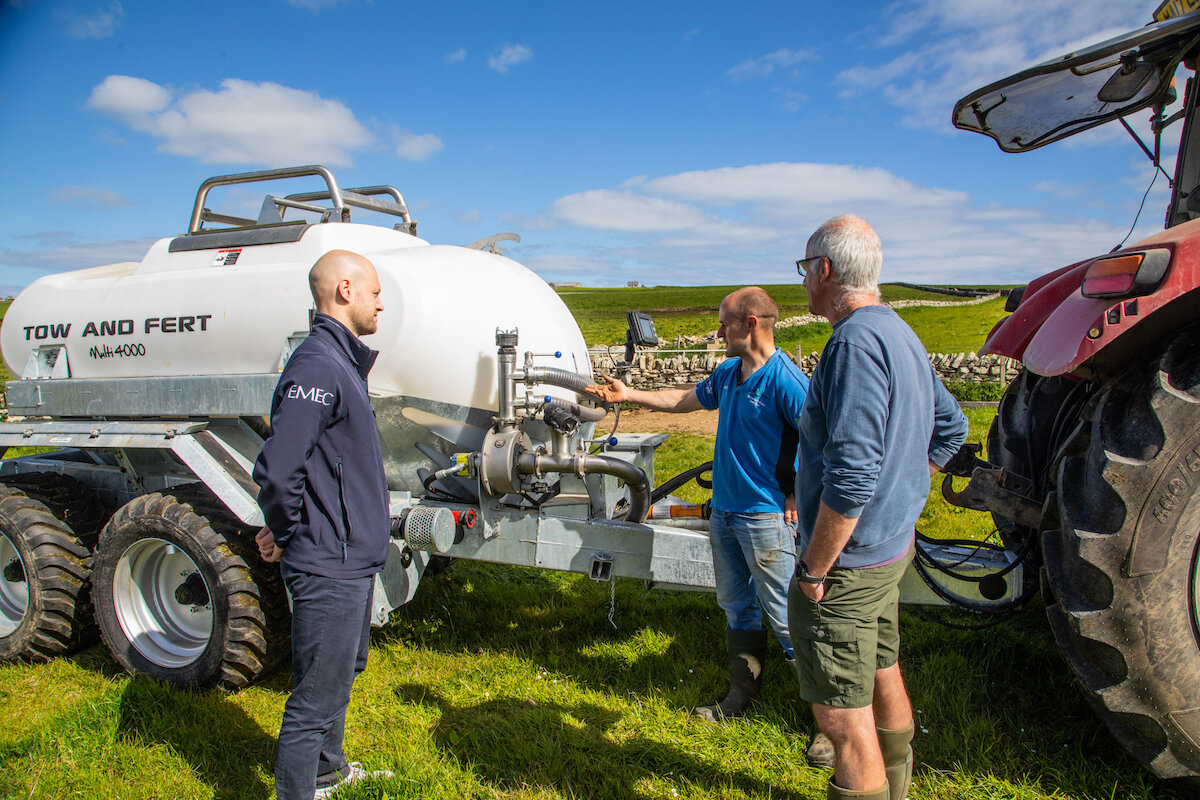
The Tow and Fert equipment being demonstrated
Using equipment purchased through ICNZ, Muckle Ocklester Farm in Orkney is trialling the feasibility, usability and performance of a Tow and Fert system, a specialist tool for dissolving solid fertilisers and applying them as liquid, known as foliar fertilisation. This technique delivers nutrients directly to crop leaves, meaning faster absorption and quicker response times (in comparison to traditional soil fertilisation which also requires more product).
Why does it matter?
Orkney imports over 30,000 tonnes of solid fertiliser each year, 7,000 tonnes of which is ammonium nitrate which generates significant emissions (2.6 tonnes of carbon dioxide equivalent (CO₂e) per tonne). By using the Tow and Fert system, we aim to cut solid nitrogen fertiliser use and maintain crop yields.
How will it work?
Over a six-month growing season, the Tow and Fert sprayer will be used on an area of grassland and compared to grassland where conventional solid soil fertiliser is used, and another area of grassland where no fertiliser is used. Productivity, cost impact and carbon footprint will be closely monitored at two-week intervals.
What’s the impact?
By monitoring the effectiveness of using the Tow and Fert system, we want to show that it’s possible to lower emissions by reducing the amount of fertiliser used across Orkney. This will include fewer emissions from the product itself, but also by reducing how much is shipped in the Islands. The trial results will be used to demonstrate the technology, de-risking it and making it easier for other island farms to adopt it. This could help to safeguard jobs and the environment.
Methane reduction in beef cattle
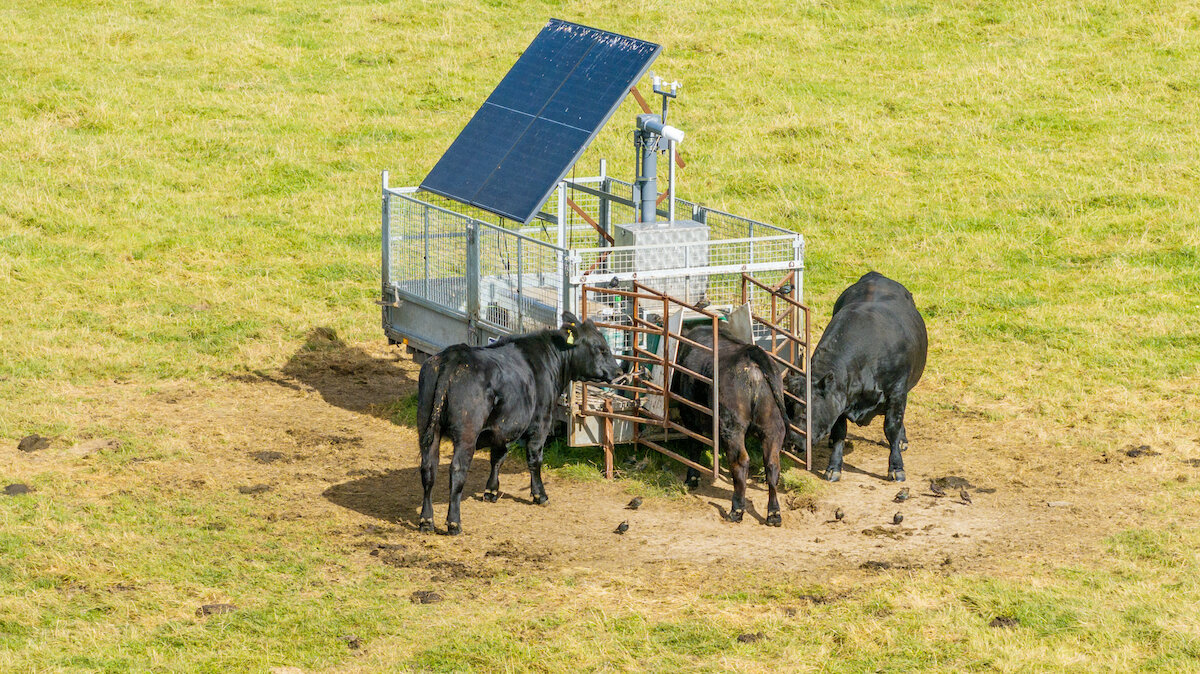
The GreenFeed system in operation at Skaill Farm
Skaill Farm in Orkney is trialling a GreenFeed system which measures methane and other gases from cattle while linking the data to feed efficiency metrics. This integrated approach allows farmers to identify and breed animals with superior genetics for lower emissions and better feed conversion, driving environmental and economic benefits.
Why does it matter?
According to the Scottish Government’s agricultural census, Orkney has around 27,000 - 30,000 beef cattle. Beef cattle typically emit around 1.8 - 2.5 tonnes of CO₂ equivalent per head per year, depending on factors like diet and manure management, with enteric fermentation (methane produced during digestion) being the largest contributor to these emissions. There is currently a lack of precise methods to measure methane emissions at an individual animal level, hindering efforts to breed cattle with lower emissions and directly target greenhouse gas reduction.
How will it work?
The GreenFeed System works by attracting cattle to a small feeding station that discreetly measures the methane and carbon dioxide they breathe out. As the animals eat, the system draws in and analyses their exhaled air, giving farmers accurate, real-time emissions data without causing stress or disrupting normal behaviour.
What’s the impact?
Research indicates that methane emissions from cattle can be reduced by 10-30% with targeted interventions based on GreenFeed data. If successful, this model could be replicated across Orkney and beyond, driving down emissions and positioning Skaill Farm as a leader in sustainable beef breeding.
Building resilient cropping systems
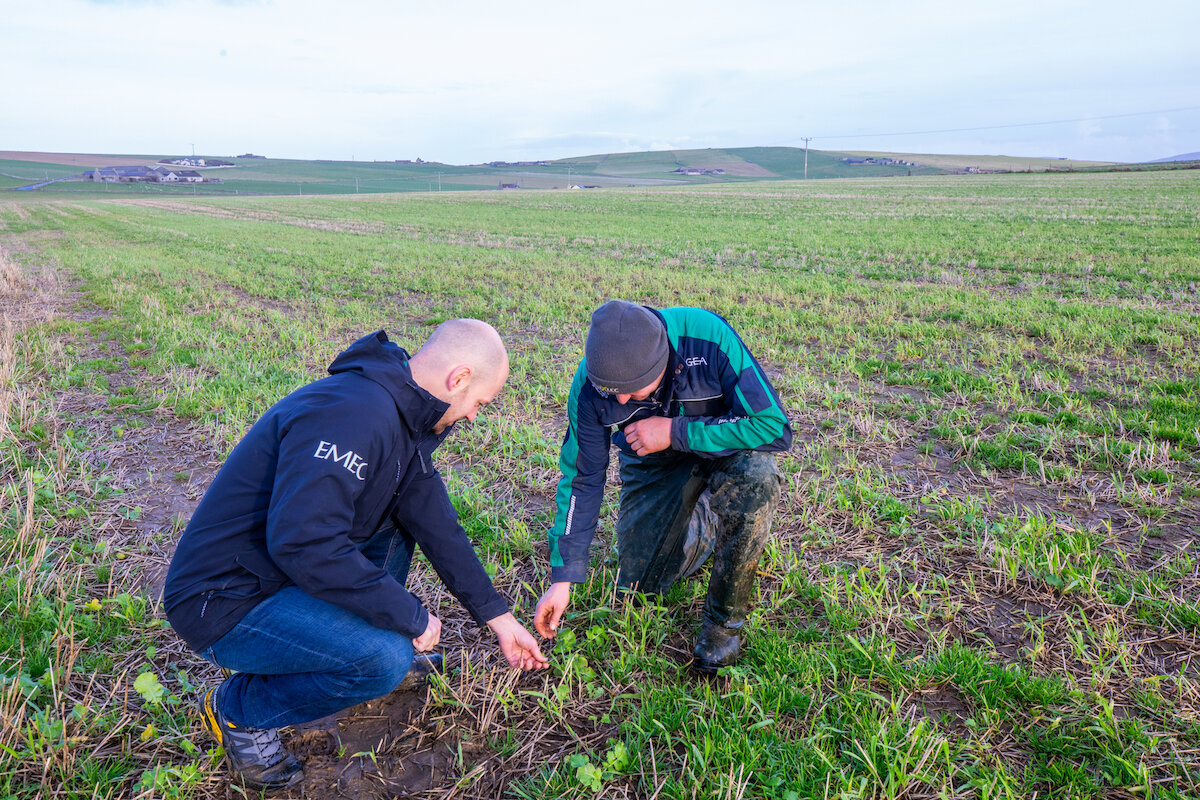
Cover crops growing at Brettobreck Farm
In partnership with the UHI Orkney Institute for Agronomy and Agriculture, a five-year trial is integrating cover crops into barley production. The cover crops are planted between main crop cycles to enhance soil health, increase forage crop diversity, reduce synthetic fertiliser use and lower greenhouse gas emissions.
Why does it matter?
Cover crops protect soil from erosion, improve nutrient retention and enhance resilience against extreme weather experienced over winter. They also support local feed production, reducing dependency on imports and transportation emissions. When growing spring barley in Orkney, up to 40% of nitrogen fertiliser can be lost to leaching (run-off). Over winter, cover crops can reduce nitrate leaching by 45%, representing 18% of the nitrogen applied.
How will it work?
The project runs from 2025-30, with field trials at UHI Orkney and across local farms to assess crop performance, soil health improvements, feed potential and economic viability. The project aims to build confidence in cover cropping practices, ensuring long-term adoption and sector-wide benefits.
What’s the impact?
Findings from the trials will support knowledge sharing across other Scottish islands with similar climate and cropping systems, encouraging wider adoption of regenerative and sustainable farming practices. The project will also ensure farmers on the islands are better prepared for the upcoming changes to agricultural support by showing they are adopting outcomes in relation to climate change mitigation and adaptation.
Investing in Orkney’s dairy future
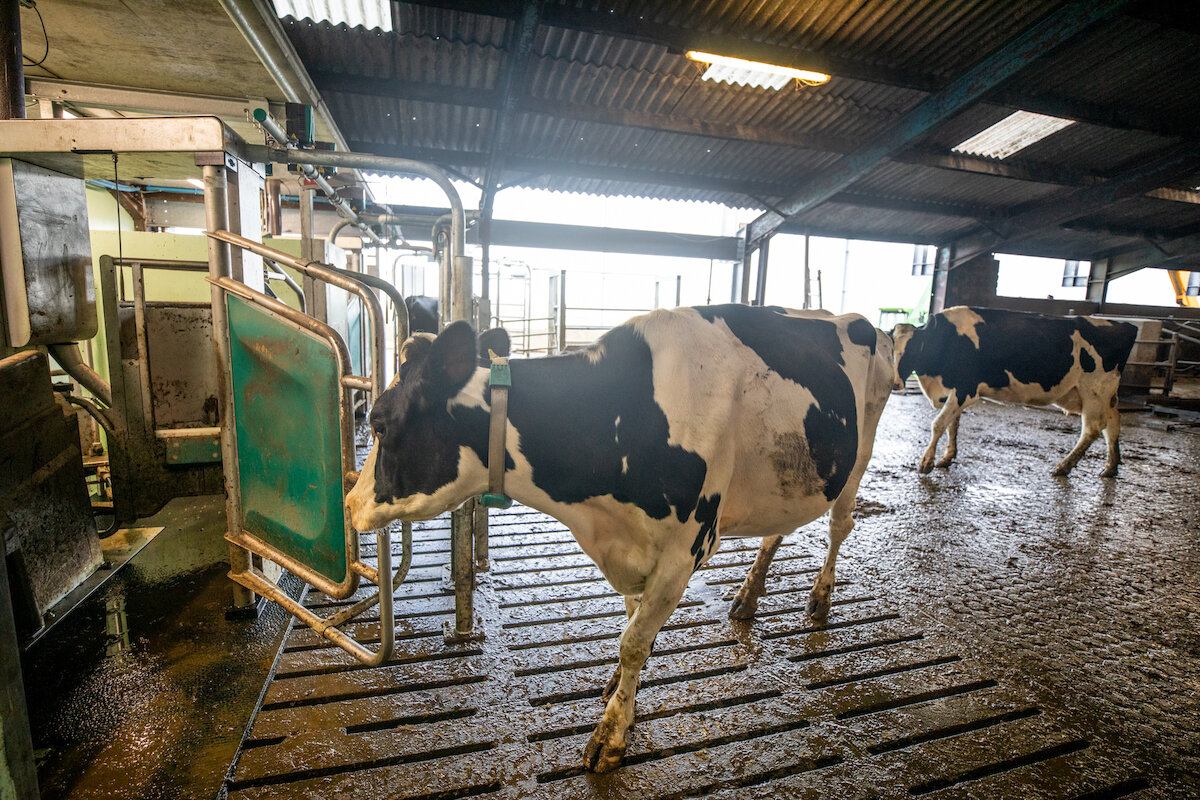
Robotic milking machine in operation at Brettobreck Farm
The Dairy Productivity Scheme is a collaborative effort between ICNZ, HIE (Highlands and Islands Enterprise) and OIC (Orkney Islands Council) to provide financial support to bring cutting-edge robotic milking technology to Orkney’s dairy sector. This initiative will reduce emissions and boost local milk production.
Why does it matter?
A move from current traditional methods towards robotics systems can increase productivity and use less energy, whilst helping to build a more sustainable future for the industry in Orkney.
How will it work?
Robotic milking systems let cows choose when to be milked, guiding them in with a small feed reward while a robotic arm attaches the cups and collects real-time health and production data. This reduces labour, improves cow welfare, and supports more efficient, lower-emission dairy production compared with traditional parlour milking.
Significant financial investment is required to modernise Orkneys dairy sector, with HIE and SAC (Scottish Agricultural College) estimating it will take between £3 - £4 Million. The grant funding available through this scheme will help incentivise investment and reduce financial risk for individual farms. The three-year scheme, which is led by HIE, means that farms can apply for financial support covering up to 30% of the costs for upgrading to robotic milking systems and associated equipment. This makes the transition more accessible for local farmers.
What’s the impact?
Switching eight Orkney dairy farms to robotic milking could save almost 14 tonnes of CO₂ every year, with a 25% reduction in energy use per farm. This will be an impressive step toward a more sustainable agricultural sector, a reduction in emissions and a more productive dairy industry.
Looking ahead
These demonstration projects are more than trials, they’re stepping stones toward a resilient, low-carbon future for Orkney’s agriculture. By sharing knowledge and fostering innovation, we’re ensuring our farming community is ready for the challenges and opportunities ahead.