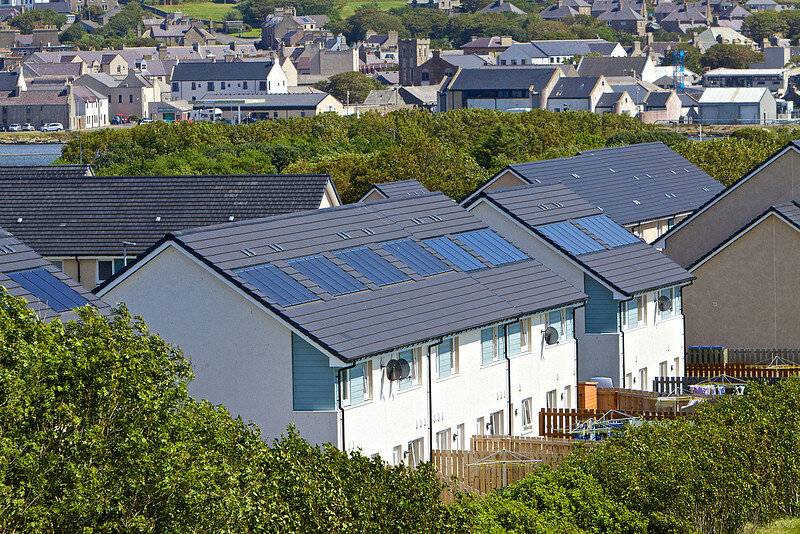
Many ICAN members are community groups with buildings, and there is a great interest in how to make these important community facilities more energy efficient and cheaper to run. Members heard from Anand Sajeevan and Carmen Lean from Community Energy Scotland who gave a presentation on 'Solar PV - Basics, Barriers, Benefits & Models'.
After giving a brief overview of the basics of Solar PV systems and things to consider in terms of building suitability, Anand and Carmen went on highlight some of the common technical and organisational barriers that need to be considered when planning a project and post installation operation and maintenance. It is important to be aware that structural issues such as roof condition and complex electrical layouts can add uncertainty and costs to projects, and for island communities grid limits can restrict electricity export capacity. Many community organisations have limited staff capacity, often relying on volunteers to develop and progress projects, which can add an extra challenge in terms of time and access to technical expertise.
Anand and Carmen are part of the Community Energy Launchpad project which supports communities to explore their options and prepare to bid for Local Energy Scotland funding through the Scottish Government's Community and Renewable Energy Scheme (CARES). CARES funding is open to non-profit groups and organisations who meet the schemes eligibility requirements in terms of how they are structured, operate, governed, and uphold values of equality and fair work. Eligible organisations can apply for the Community Buildings Fund which offers grants for energy efficiency measures e.g. heat pumps, and renewable energy systems in community buildings; or the Community Energy Generation Growth Fund which provides grants and loans for community energy generation projects.
The presentation gave examples of communities who had successfully installed solar PV illustrating three models of community operation:
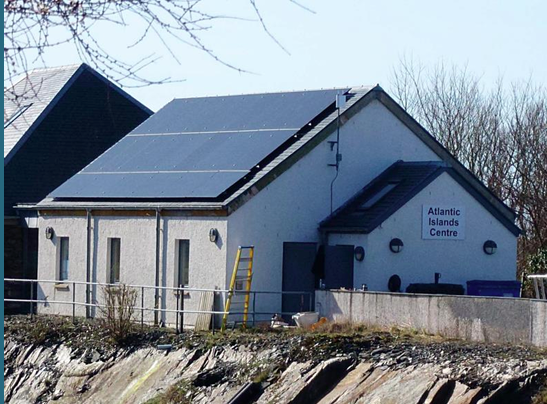
Model 1: Solar PV for community buildings. In this model, the electricity generated is used directly by the building, with batteries providing storage and only when batteries are full and there is no demand from the building is electricity exported to the grid. A particularly relevant example of this model is the Atlantic Islands Centre on Luing, run by the Isle of Luing Community Trust. The Centre's roof mounted solar panels heat the building through a heat pump, charge large storage batteries and have the ability to operate off grid during power disruptions, allowing the building to act as a community resilience hub.
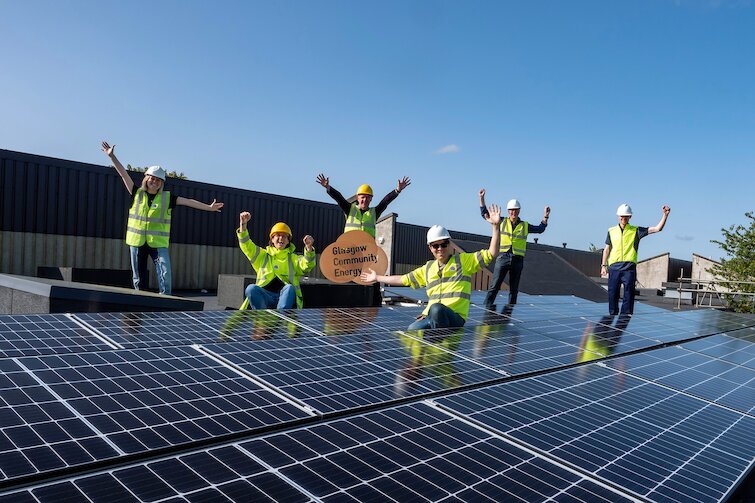
Model 2: Solar PV energy sold to a Local Energy User. The example given was Glasgow Community Energy which is a local energy co-operative that installs solar panels on schools and public buildings. The electricity produced is sold to the host buildings at a fair price generating income for the co-operative, surplus income is allocated to the Cathy McCormack Community Activism Fund which supports grassroots community projects addressing the root causes of climate and social injustice.
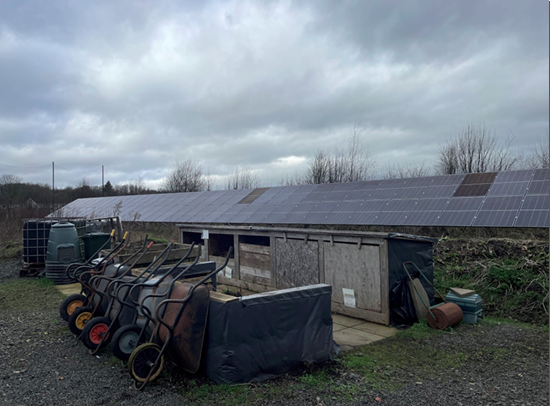
Model 3: Solar PV for Grid Export. The example shared was Braehead Community Garden who have installed a 30kw solar panel array which is large enough to cover the garden's electricity usage with the bulk of generation being exported to the grid. This produces around £2000 per year in income for the community garden.
Anand and Carmen then answered questions from ICAN members and finished the session with an activity where different scenarios were presented in terms of building type, use and timing of activities, orientation and shading, and electricity usage. The meeting participants were asked to evaluate the suitability of each scenario for solar PV.
While each of the scenarios presented some challenges for optimum performance, the takeaway message was that each site still offered potential savings in running costs and carbon emissions, and that solar PV can deliver significant benefits to community organisations with careful planning and consideration of possible barriers.
Anyone interested in learning more about the support available to communities through the Launchpad scheme can contact [email protected].